Hi, there folks! Once again, it is an honor to hang out with you.
This week’s podcast is a little bit silly. But, I am dead serious when I say that This. Tool. Works! If you are struggling with perfectionism, or anxiety that stops you from starting a project or participating in an event, this is the podcast for you.
Sometimes we need a different perspective to pull us out of our constant need to make things perfect and perform in a way that doesn’t make us vulnerable. Writing about it doesn’t really do it justice, so give this episode a listen. I hope it gives you a little laugh and you can use this tool when you are up against fear and need a little push forward.
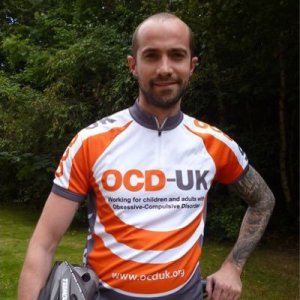
Today, I am thrilled to interview Stuart Ralph, the host of the amazing OCD Stories Podcast.
In his podcast, Stuart interviews some of the most influential and inspiring psychotherapists and researchers in the anxiety and Obsessive Compulsive Disorder field. During our interview together, I asked Stuart to tell us about some of the most inspiring and memorable interviews he has done and he gave us some SUPER important takeaways.
How Reid Wilson taught him that “The Content of your worries is trash”.
How Professor Paul Gilbert (Founder of Compassion Focused Treatment and author of the book, The Compassionate Mind) discussed the application of Self Compassion and how important it is for mental health recovery (especially those who experience anxiety, OCD and mood disorders).
Stuart left us with this big piece of wisdom;
“We all need love and self-care, and if we give ourselves huge doses of that we can move towards recovery”.
I hope you enjoyed this interview as much as I did!
Please don’t forget to leave a review for this podcast! Your reviews help us reach more people, so then I can help more people!
Are you tired of feeling like anxiety always has the reins? This tool might be exactly what you are looking for and can be a powerful complement to the work you are already doing with anxiety.
The tool is called “Shoulders Back!” and our AMAZING CBT ROCKSTAR guest is Shala Nicely!
Shala explains how she came across this tool and how she uses it, both in her own life and with her clients with anxiety and Obsessive Compulsive Disorder (OCD). The reason I LOVE this tool so much is that it is easy, empowering and science-based.
Here are the links we discussed! Don’t forget to check out Shala and Jeff Bell’s E-course to help you with motivation for ERP for OCD.
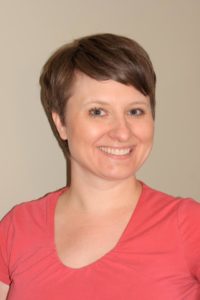

Today, I am thrilled to have guest, Alison Dotson on the Your Anxiety Toolkit Podcast.
During this podcast, Alison shares her journey from not even knowing what OCD was to what helped her with her recovery. Alison and I had a fun time also managing technological hiccups, which ended up being a wonderful practice of mindfulness.
In this book, Alison shares her personal journey with obsessive-compulsive disorder and includes some of the most heart-wrenching details. Her genuine goal is to spread awareness and helping teens and young adults with OCD.
Today, we have an AMAZING guess on the podcast, Dave Trachtenberg. Dave is the Program Director at Minds Incorporated. Minds Inc. is a non-profit dedicated to empowering Washington DC-area schools by teaching mindfulness-based practices to students, educators, and parents.
During the Podcast, Dave shares how
Minds Inc. teaches students, starting in elementary school (and their educators, and parents) simple daily mindfulness practices. Dave speaks about how these teachings increase focus and attention, reduce stress and anxiety, create resilience and the capacity to handle difficult emotions, and build compassion.
As discussed in the podcast, sometimes when I get down about the state of the world, I find myself doing late night Google searches on how I can make it better. In my searches, I found Minds Inc’s website and came across Dave. Dave shared some beautiful stories about helping young children and teens and also shared his own struggles with OCD, Tic Disorder, Depression and Self-worth.
Dave answered the following questions:
Tell us about Minds Inc?
What got you involved in teaching meditation to Teachers, Students and Parents?
What is your personal experience with meditation and Mindfulness?
What at some experiences/examples of situations you have had with youth at Minds Incorporated?(successes, struggles, changes made)?
What type of meditation does Minds Inc. teach?
What special tools/practices do you use for living mindfully?
What advice do you give for those starting out with meditation?
Tell us how you manage struggles with meditation?
How can we teach our children?
This was one of my favorite conversations and I am so thrilled to share it with you. I would love to hear your feedback.
src=”https://html5-player.libsyn.com/embed/episode/id/6032697/height/90/theme/custom/autoplay/no/autonext/no/thumbnail/yes/preload/no/no_addthis/no/direction/forward/render-playlist/no/custom-color/88AA3C/” height=”90″ width=”100%” placement=”top” theme=”custom”Well, Lets be honest! Sometimes I get so excited about practicing and teaching the deep and helpful concepts of Mindfulness that I forget to remind y’all of how simple it can and should be!
Often, when we experience anxiety (or other strong emotions), we often forget everything we have learned and are left standing helpful and afraid. In this podcast, we return to one of the most simplest and easiest Mindfulness tool available.
Check it out! And, if you are noticing how basic and thinned out this blog is, that is no accident. This week, we are practicing simplicity!! See you next week!
Vulnerability: The Road to Courage, Self-Compassion and Self-Worth
In today’s podcast, I wanted to dissect the concept of Vulnerability.
Brene Brown, reknowned researcher on Vulnerability defines Vulnerability as
“Uncertainty, Risk and Emotional Exposure”
I find this somewhat ironic, as Uncertainty, Risk and Emotional Exposure are the worst nightmare of someone who experiences anxiety, OCD, an eating disorder (such as Anorexia Nervosa or Bulimia Nervosa), trauma, grief or depression.
I think many humans struggle with these concepts, but I feel that it is significantly difficult for those who struggle with these mental health disorders. In many cases, there is a complete rejection of vulnerability.
I believe we think that if we avoid vulnerability, we
can rid ourselves of shame, embarrassment, being judged, feeling sad or hurt.
However, all we end up doing is numbing.
When we have anxiety, we think that if we avoid vulnerability, we could rid ourselves of possible bad or catastrophicoutcomes.
However, all we end up doing is becoming compulsive.
In this podcast, I detail the workings of those who are successful at being vulnerable and take a look at the outcomes that result.
We will outlines ways that you can practice vulnerability in large or small steps.
We look at the repurcussions of staying safe and avoiding vulernability and we detail the research’s findings about self-worth and conectivity.
I hope you enjoy it!This is one of my favorite subjects.
Episode #24: Willingness-Leave It All Out On The Field!
I LOVE the term, “leave it all out on the field!”
There is something totally radical and badass about the idea of “leaving it all out on the field!” It means we are committed to the hard work. It demonstrates that we are ready to feel some discomfort. “Leaving it out on the field” describes giving it your everything. I LOVE it!
How does this apply to Mindfulness? The degree that you “leave it out on the field” is a great way to describe Willingness. Willingness is radically accepting and giving consent to our present experience.
We can conceptualize Willingness as scale, similar to a continuum.
0/10 Willingness implies we have absolutely NO willingness to be uncomfortable (or have anxiety, intrusive thoughts, panic, have uncertainty).
We reject all feelings of discomfort
Fear makes our decisions (causing us to do more compulsions)
Disown any negative experience
10/10 Willingness is saying 100% “YES” to whatever experience of discomfort that arises
Radically accepting the feared outcome
Allowing yourself to have anxiety, fear and intrusive thoughts.
You LEFT IT ALL OUT ON THE FIELD!
Listen to hear ways to increase your WILLINGNESS, even if it is just a teeny, tiny bit.
Hi there guys! I couldn’t finish the day without checking in with you and sending you my support after such a difficult day. This podcast was not planned and I kind of threw it together at the last minute. I hope it is helpful.
For anyone in Las Vegas or Puerto Rico or any other place where there is destruction and pain, please know that I am praying for you and I hold you in my heart.
These scary events can trigger our already high anxiety, so please listen for some tips and tools to manage your anxiety about the current events and affairs in the news.
A couple of important points:
Anger Sadness and Anxiety/Fear are all very human responses to these horrific events.
Obsessions to look out for:
“Will this happen to me, or a loved one?”
Intrusive Imagery (Mental images of people suffering from traumatic events, shootings, hurricanes, earthquakes etc)
Intrusive sounds (Gun shots, people crying, sobbing, screaming, sirens etc)
For those with Harm OCD: “Am I capable of doing such an act?”
Compulsions to look out for
Mental Review or Mental Compulsions about the event or possibility of this happening to you or a loved one
Reassurance Seeking (checking news, checking phones, asking a loved one if they will be ok etc)
Avoidance (future vacations, work, school, thought blocking, etc)
How to Heal Self-Blame with Self-Forgiveness using Ho’oponopono Meditation
If you are anything like me, you are quick to blame yourself for any of the below reasons:
You have not achieved some level or expectation.
You tried to better yourself and you “failed.”
You made a mistake (unintentional) or had an accident (I call this, “You Did a human” AKA Making a human mistake)
Especially for you, if you have OCD; You have “bad” thoughts, intrusive thoughts, thoughts you deem “unacceptable.”
You feel like you are a BAD person who doesn’t EVER deserve to be forgiven.
You are attempting to work through your mental health issues.
You struggle to do exposures or follow some treatment goal.
You experience self-disgust (for having pimples, cellulite, intrusive thoughts etc.
My main message in this podcast is this:
HUMANS ARE NOT SUPPOSED TO BE PERFECT!
HUMANS ARE ALWAYS AND FOREVER GOING TO MAKE MISTAKES!
This podcast details a practice called Ho’oponopono. Ho-oponopon is a spiritual practice of harmony between people, nature and spirit that has been used in Hawaiian and other Polynesian cultures for centuries.
Ho’oponopono Key Concept: We can heal our own wounds and then we can then go out and heal our world.
Ho’oponopono Meditation Foundation:
I’m sorry.
Please forgive me.
I love you.
Thank you.
Here are some ridiculous reason to not practice Self-Forgiveness:
You only deserve Self-Forgiveness after you make the world better (giving service to others).
If you forgive myself, you will stop caring and let yourself go and become and even worse person.
Once you are perfect, then you can forgive yourself.
If you blame myself first, it will hurt less if someone else blames you or notices your imperfections.
Please do not let these reason stop you from freeing yourself from Self-Blame.
Give it a try and see if it works for you! I found it to be a very powerful practice.